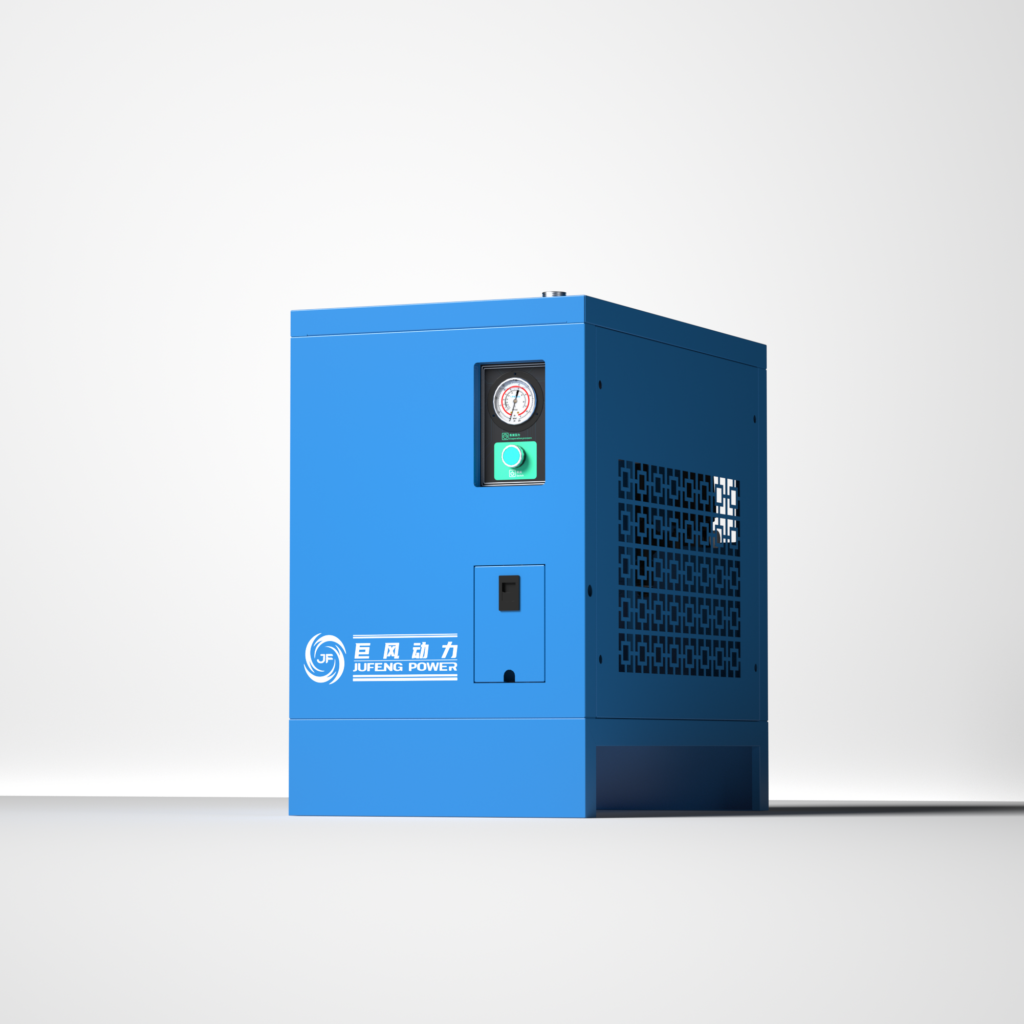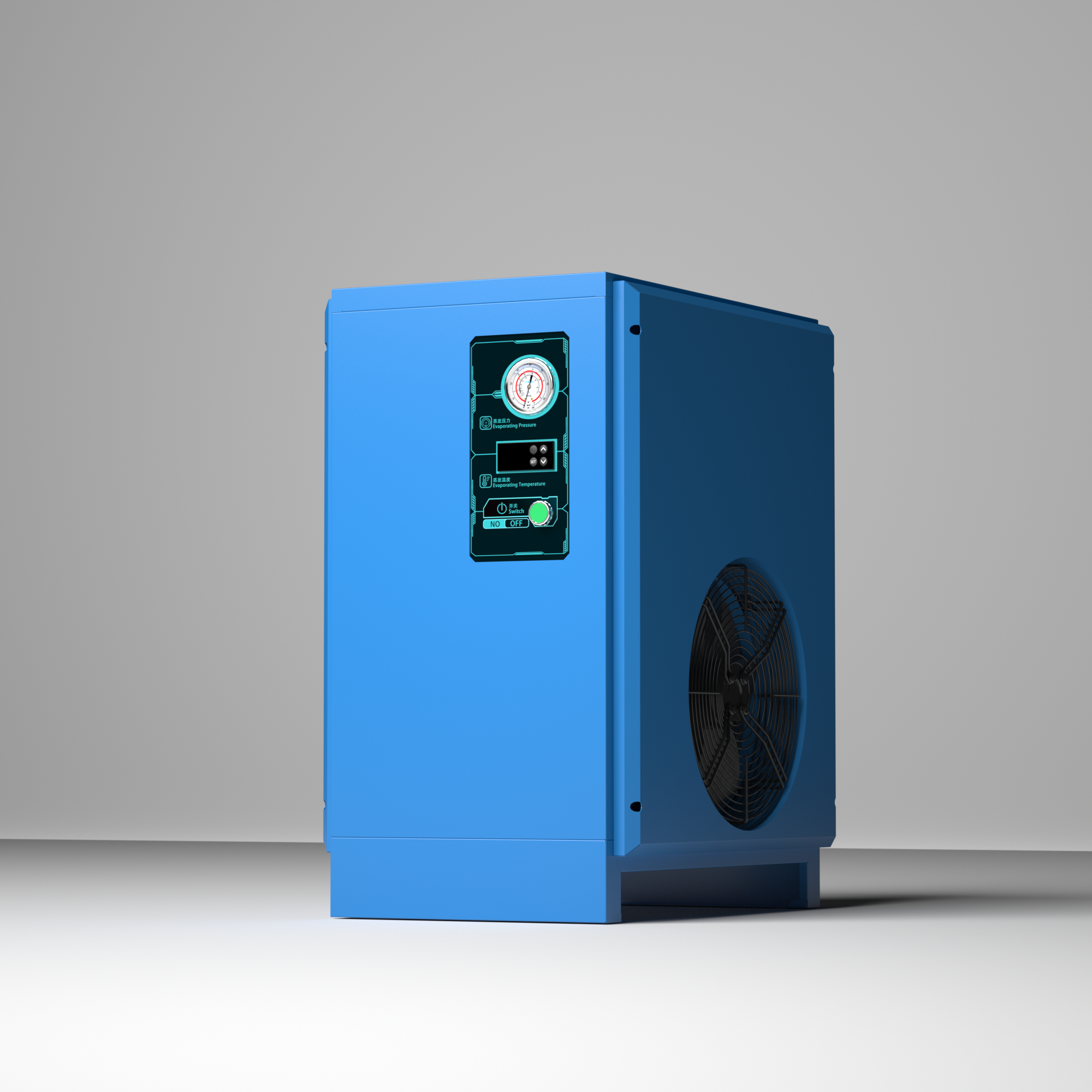
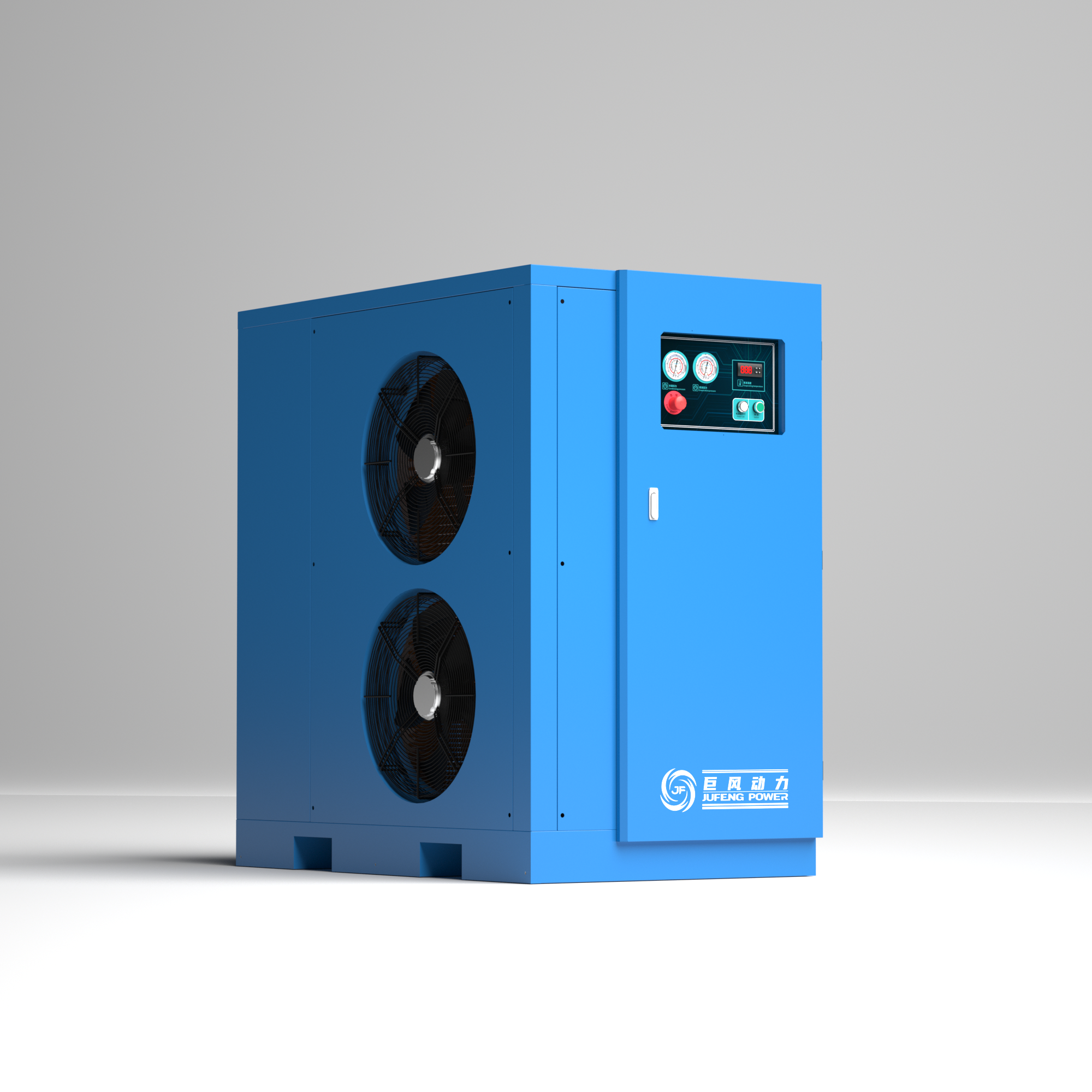
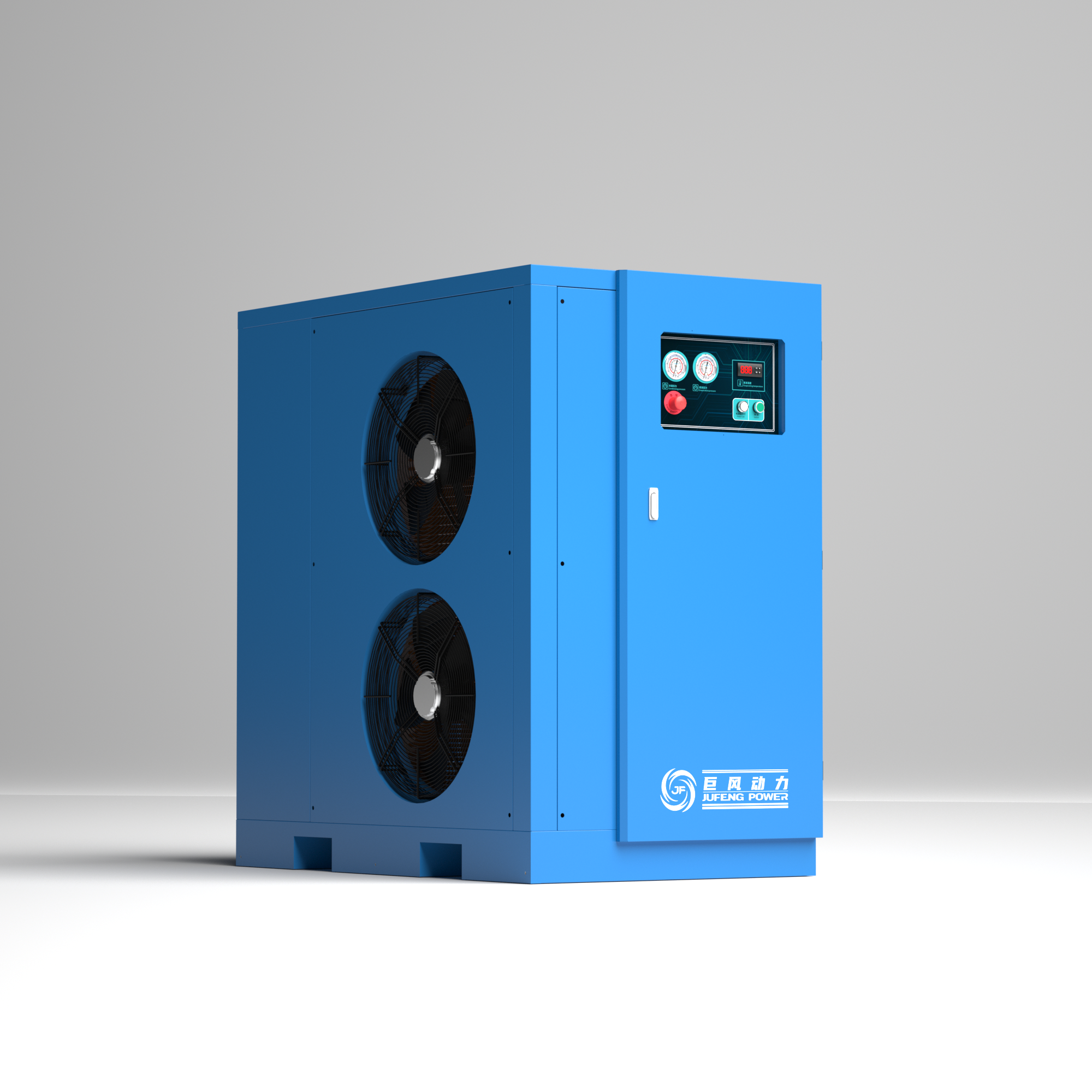
Refrigerated Air Dryer

With over 20 years of expertise in hydrogen compression technology, JUFENG is a leading provider in the world. More than 2,000 of our units are successfully operating in various hydrogen applications, delivering a combined installed horsepower exceeding 2 million.

What is a Refrigerated Air Dryer ?

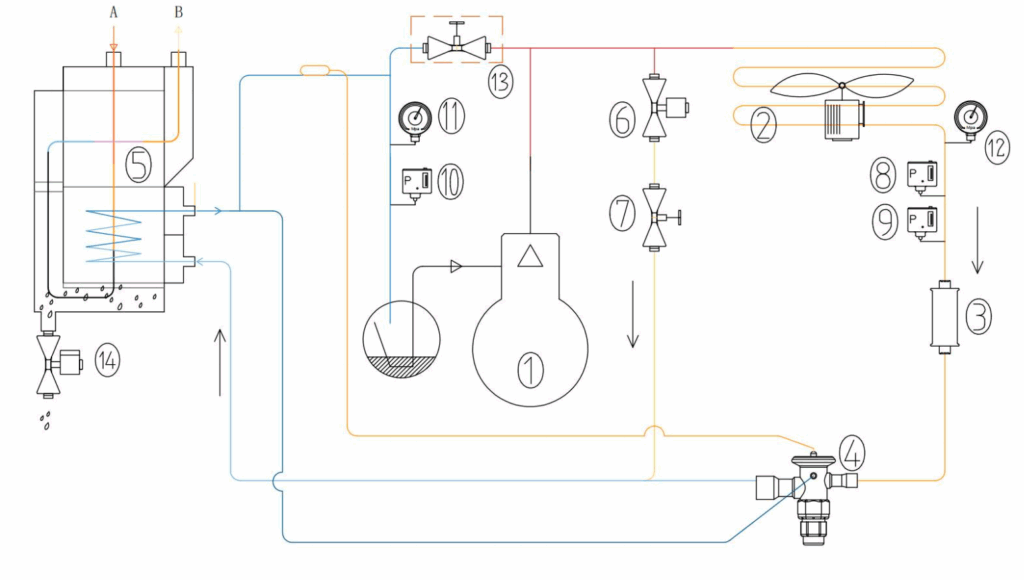
A refrigerated air dryer, the core equipment in a compressed air post-treatment system, operates on the principle of “moisture removal through cooling.”

It utilizes a refrigeration system to cool the warm, saturated compressed air to a lower pressure dew point (typically 2–10°C). This process causes the large amount of water vapor in the air to condense into liquid water, which is then thoroughly removed by an efficient water separator. The final output is clean, dry compressed air, achieved through an efficient and economical physical drying method.

Wide-Ranging Applications of Air Dryers

An air dryer is an essential industrial equipment designed to remove moisture from compressed air, ensuring a clean, dry, and high-quality air supply. By eliminating water vapor, air dryers prevent a multitude of problems caused by moisture, such as corrosion in pipelines, damage to pneumatic tools, and contamination of end products. Their critical role in protecting equipment and ensuring process integrity makes them indispensable across numerous sectors.

The applications of air dryers are vast and varied:

Outstanding Advantages of Refrigerated Air Dryers

Key Advantages

Among various drying technologies, refrigerated air dryers have become the most mainstream choice due to their efficiency, cost-effectiveness, and reliability. Our dryers offer even greater advantages:

Project Case Study

FAQ

A1:

  • It cannot remove water vapor in its gaseous state. Refrigerated dryers primarily reduce the air temperature to condense and remove liquid moisture, with their drying capacity measured by the “pressure dew point” (typically 2–10°C). If a lower dew point is required (e.g., below -20°C), an adsorption dryer should be selected.

A2:

The selection is primarily based on two parameters:

  • The selection is primarily based on two parameters:

  • The compressor’s rated working pressure (MPa/Bar).

Our professional team can provide complimentary sizing recommendations.

A3:

  • Not at all. It is typically installed between the air compressor and the air receiver tank. Only inlet/outlet piping connections and a power supply are required. We provide detailed installation guidance.

A4:

  • Maintenance is very simple. It mainly involves periodically cleaning the condenser to ensure efficient heat dissipation, and regularly inspecting and draining the automatic drain valve to confirm proper operation.